Do I need colon cancer screening if I have no symptoms?
That’s exactly when screening is meant to happen.
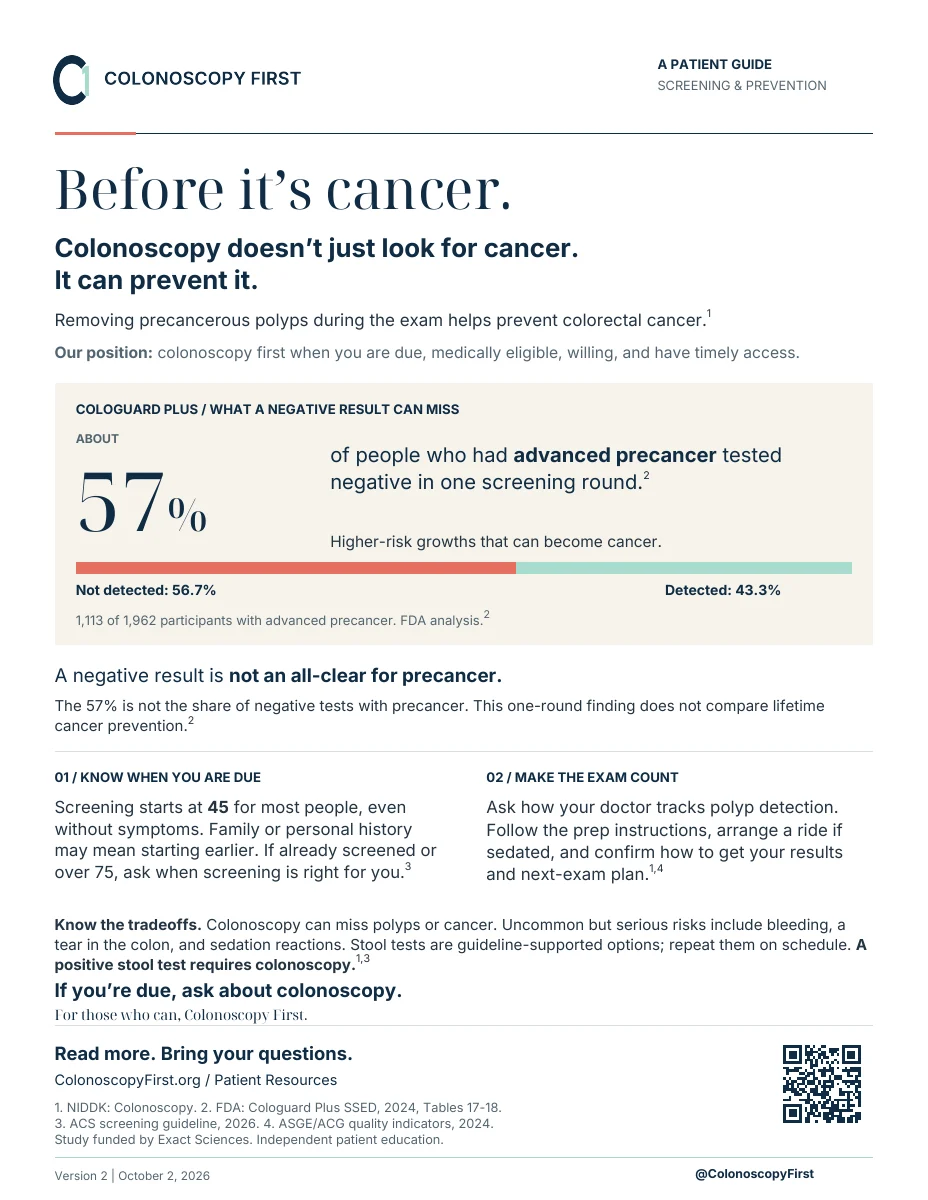
Precancerous polyps and early cancer usually cause no symptoms. Colonoscopy can find polyps and remove them in the same exam, before they have the chance to become cancer.
Your next step: If you’re due for screening, don’t wait for symptoms. If you already have rectal bleeding, lasting bowel changes or unexplained weight loss, contact your clinician for an evaluation, even after a negative stool test.
Sources: NCI: why screening matters · NIH: symptoms and colonoscopy
Do I need colon cancer screening if I have no family history?
No family history does not mean no risk.
Most colorectal cancers occur in people with no family history of it. A family history can mean starting earlier; not having one doesn’t mean skipping screening.
Your next step: Average-risk screening generally begins at 45. Go over your age, previous tests, health and family history with your clinician to find out whether you’re due.
Sources: ACS: family history and risk · Screening recommendations
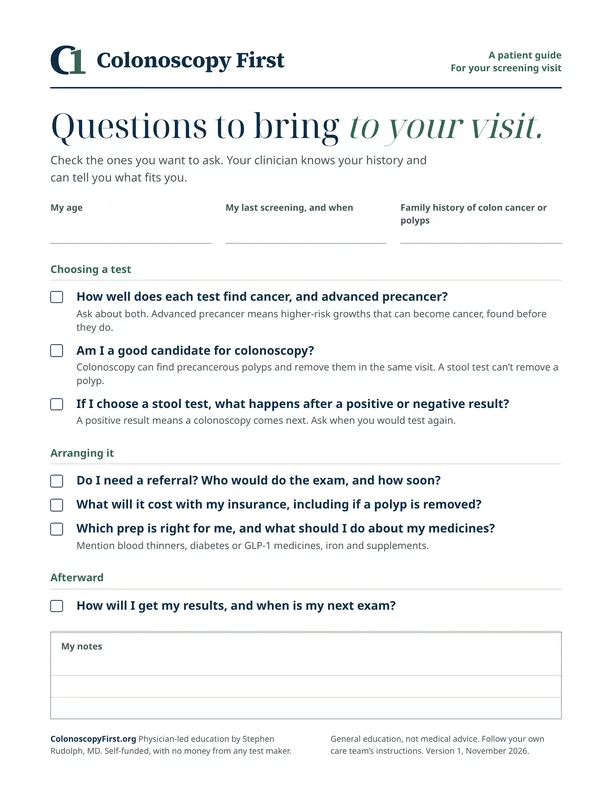
What will a colonoscopy cost, and will insurance cover it?
Coverage depends on your plan and the reason for the exam.
Coverage depends on your plan, eligibility, network and the reason for the exam. An exam for symptoms may be covered differently.
Coverage, expected charges and financial assistance
Sources: Federal preventive-care coverage guidance · Medicare coverage
How much time do I need for a colonoscopy?
Plan for preparation, the procedure and recovery.
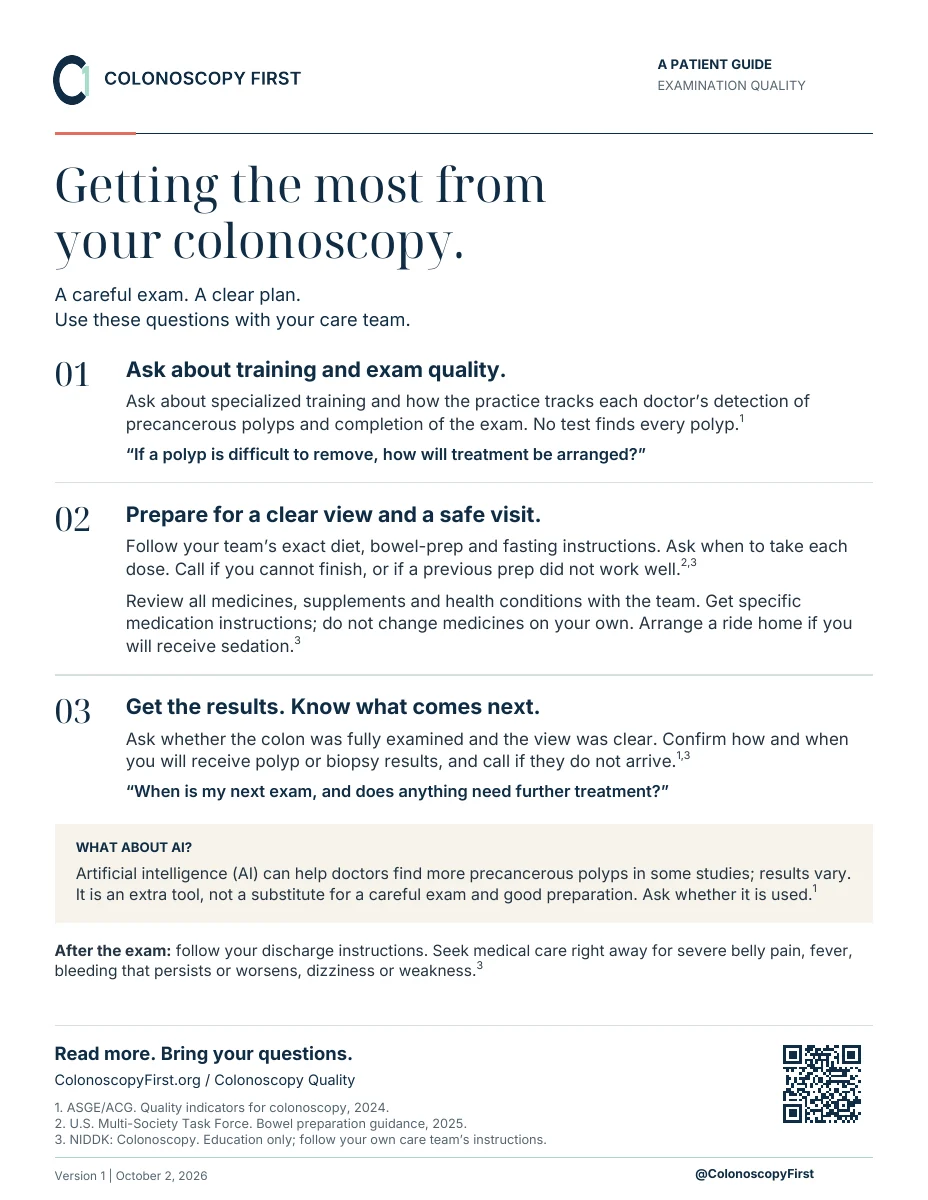
Plan for bathroom access during the prep, and for time away from work on the procedure day if you’re sedated. You’ll need a ride home. Many people return to their usual activities the next day, but follow your team’s discharge restrictions.
Planning time off and recovery
Sources: AGA: planning and recovery · Screening intervals
What does colonoscopy preparation involve?
A clean colon helps your doctor see clearly.
Frequent bathroom trips and changes to eating and drinking are part of the prep. Leftover stool can hide polyps and may lead to an earlier repeat exam.
Preparation options and instructions
Sources: 2025 multisociety prep guidance · NIH: preparing for colonoscopy
What about my comfort and privacy?
Your next step: Tell the team what worries you: pain, embarrassment, loss of control, or a past experience. Ask how they will protect your privacy, what sedation to expect, and what accommodations are possible. You deserve that conversation before you consent.
Sources: AGA: what happens during the exam